Loading...
Serving Bellflower, CA and surrounding areas. (562) 263-4398
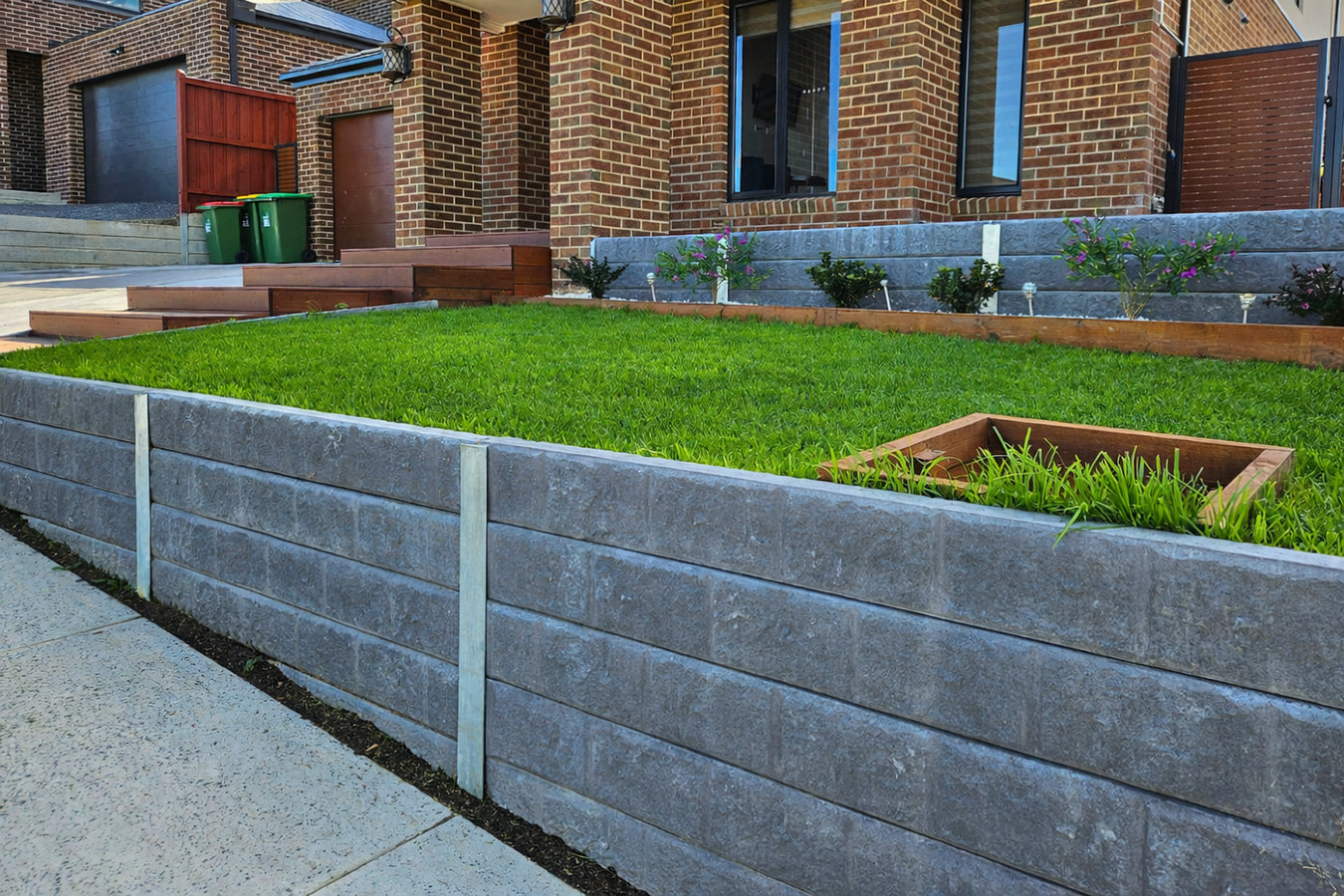
Slopes shifting after rain, soil eroding, or an old wall leaning forward — we build concrete retaining walls designed for Bellflower clay soil and seismic standards.
Concrete retaining walls in Bellflower hold back sloped or unstable soil so your yard, foundation, and drainage stay where they belong — most residential wall builds take two to five days on-site once permits are in place, though the full process from contract to completion typically runs three to six weeks.
If you have a sloped backyard, an eroding hillside, or an old wall that is starting to lean, a new concrete retaining wall is the lasting fix. Many Bellflower homeowners also use retaining walls to carve out flat, usable space on lots that would otherwise be too uneven for a patio or garden — a project that pairs naturally with our concrete floor installation work when creating a finished outdoor area.
Bellflower sits on expansive clay soil that swells when wet and shrinks when dry. Without proper drainage and footing depth, that constant movement is what makes walls fail. We build with those local conditions in mind from day one.
These are the signs most Bellflower homeowners notice before calling us.
If bare patches appear after rain or soil piles up at the base of a slope, the ground is moving. In Bellflower, clay soils shift with every wet season and the erosion tends to get worse each year. A retaining wall stops the movement before it reaches your foundation or a neighbor's property.
A wall tilting away from the soil it holds is under more pressure than it was designed for. This is common in older Bellflower homes where walls were built before current seismic and soil standards. A leaning wall can fail suddenly, especially after a rain event or a tremor.
If rainwater collects near your house instead of draining away, a retaining wall system can redirect that flow. Southern California rainy season sends a lot of water in a short time, and flat or poorly graded Bellflower yards often cannot handle it. Persistent pooling near the house is an early warning sign a retaining wall can solve.
Horizontal cracks in a driveway, patio, or fence line running parallel to a slope can signal that soil movement is already underway. In Bellflower clay-heavy soil, this kind of cracking often shows up after a dry summer followed by the first heavy rains. It is worth having a contractor look at the slope before the damage spreads.
We build two main types of concrete retaining walls for Bellflower residential properties. Poured-in-place concrete walls are formed and cast on-site — they are solid, continuous, and can be left natural gray, stained, or textured to match your home. They suit homeowners who want a seamless look and maximum strength in a compact footprint. If you are also planning a level outdoor living area, we can coordinate the wall with our concrete steps construction work so the whole project ties together cleanly.
Segmental block walls — sometimes called CMU or block retaining walls — are built from individual concrete masonry units stacked and filled with reinforcement and grout. They work well on longer runs, gentler slopes, and anywhere you want a look that blends into a garden or landscaped yard. Both types include gravel backfill and drainage built into the wall itself, because drainage is not optional — it is what keeps the wall standing when Bellflower clay soil saturates during rainy season.
Best for homeowners who want maximum strength, a clean seamless look, and a compact footprint on a tight Bellflower lot.
Ideal for longer runs, gentler slopes, or anywhere a stacked-block aesthetic blends better with existing landscaping.
Required for every wall we build — gravel backfill and weep holes prevent water pressure from pushing your wall forward.
We handle the City of Bellflower permit process and coordinate structural engineering review for taller walls so you do not have to.
Bellflower sits on the Los Angeles Basin's expansive clay soils — ground that swells when wet and shrinks when dry. That constant movement is the single biggest threat to any retaining wall in this area. A wall built without deep footings and proper drainage behind it will start to lean or crack within a few years, not because of poor concrete, but because the soil underneath never stopped moving. Southern California's rainy season makes this worse: the soil goes from bone-dry to waterlogged in a matter of hours when the first big storms arrive in November and December, and any wall with blocked drainage feels that surge of pressure immediately. Homeowners in Compton and Long Beach deal with the same clay soil conditions and face the same risks when drainage is overlooked.
Bellflower is also in one of the most seismically active regions in the country. The California Building Code requires that taller retaining walls be designed to withstand ground movement, which means an engineer's review and a city permit are not optional formalities — they are what ensures your wall stays standing when the earth shifts. On top of seismic and soil concerns, some Bellflower neighborhoods have HOA rules that govern wall height, materials, and appearance. We know the local permit process and can help you navigate HOA requirements before work begins, so there are no surprises after the wall is up.
Here is exactly what to expect from your first call to the finished wall.
We respond to all inquiries within one business day. We will ask a few quick questions about the slope, what you want to hold back, and the rough size of the wall — then we schedule a free site visit, not a phone quote.
We look at the slope, soil conditions, drainage, and any nearby obstacles like tree roots or utility lines. You receive a written estimate that spells out cost, scope, drainage approach, and whether your wall needs a city permit.
If a permit is required — which most walls over a few feet tall do need in Bellflower — we handle the application with the city's Building and Safety Division. Plan for two to four weeks of permit review before work begins.
The crew excavates, sets the footing, builds the wall, packs gravel drainage behind it, and installs weep holes as they go. Once the wall is done and cured, we clean up the site and coordinate the city inspection if one was required.
Free on-site estimate. No pressure. We handle the permit process from start to finish.
(562) 263-4398Bellflower's expansive clay is the reason most retaining walls in this area fail early. We size footings and drainage systems specifically for the soil conditions on your property — not a generic spec from a catalog. That detail is what separates a wall that lasts 50 years from one that starts leaning in five.
Every wall we build that requires it is permitted through the City of Bellflower's Building and Safety Division and engineered to California's seismic standards. You get paperwork that proves the wall is code-compliant — which matters when you sell your home and a buyer's inspector starts asking questions.
We work throughout Bellflower and the 11 surrounding cities we serve, so we know local permit offices, soil conditions, and HOA expectations across the region. That local familiarity keeps projects on schedule and avoids the delays that come with contractors who are new to the area.
Proper gravel backfill and weep holes are part of every wall we build — not an optional upgrade. The Portland Cement Association notes that drainage failure is the leading cause of retaining wall collapse. We treat it as a standard requirement, not a line item you have to negotiate for.
Every one of these points matters more in Bellflower than it would in a city with stable soil and no seismic risk. The combination of local expertise, permit familiarity, and built-in drainage is why homeowners here keep calling us back.
You can verify contractor licenses through the California Contractors State License Board. Seismic hazard information for the Los Angeles Basin is published by the USGS Earthquake Hazards Program.
Replace or upgrade an aging concrete floor in your garage, patio, or converted space with a properly prepared, reinforced new slab.
Learn moreAdd safe, durable concrete steps that connect your retaining wall terraces or outdoor living areas to each other.
Learn moreRainy season puts pressure on every slope and aging wall in the area — the sooner your wall is permitted and scheduled, the sooner your yard is protected.